

DECA prepares emerging leaders and entrepreneurs
In marketing, finance, hospitality, and management in high schools and colleges around the globe.
Latest News
The Business of Halloween: How One Night Became a Billion-Dollar Industry
November 3, 2026Every October, businesses across America start selling products that would seem absolutely ridiculous at almost any other time of year, from plastic skeletons taller than refrigerators to inflatable spiders the size of swimming pools. Stores fill their shelves with costumes people might only wear once, and enough candy to supply entire neighborhoods. All of this […]
Read MoreEvery October, businesses across America start selling products that would seem absolutely ridiculous at almost any other time of year, from plastic skeletons taller than refrigerators to inflatable spiders the size of swimming pools. Stores fill their shelves with costumes people might only wear once, and enough candy to supply entire neighborhoods. All of this is for one day: October 31st, Halloween. Millions of Americans celebrate by dressing up, knocking on strangers’ doors for candy, throwing parties, or paying to get scared in haunted houses. What exactly did businesses do to make this obscure holiday a multi-billion dollar commercial phenomenon 74% of Americans celebrate today?
Before the Candy: How Halloween Became an American Tradition
Halloween’s story began long before candy companies started designing seasonal packaging. Its roots trace back to Samhain, a Celtic festival marking the transition into winter. Irish and Scottish immigrants brought Halloween customs to America during the nineteenth century, and the holiday gradually evolved into the celebration we know today.
Early American Halloween celebrations sometimes involved pranks that escalated into vandalism, property damage, and community disruptions. Some towns even introduced laws or organized campaigns to discourage destructive behavior and make the holiday safer. Trick-or-treating eventually became a more organized way for children to celebrate, and after World War II and the growth of suburban neighborhoods, it grew into a widespread tradition.
This shift also created a business opportunity. Families began expecting to buy candy and costumes each October, giving businesses a reliable seasonal market that returned year after year.
The market wasn’t created from nothing but it did grow to create the second largest commercial holiday in the United States.
The Moment Businesses Saw an Opportunity
The rise of trick-or-treating gave candy companies a reason to think differently about their products. Candy wasn’t just an everyday treat anymore. It could become a fundamental part of an annual ritual.
Individually wrapped candy was especially convenient for handing out to groups of children, and candy manufacturers began advertising their new products for Halloween. By the 1950s, the connection between candy and trick-or-treating was becoming firmly established and today we spend over 4 billion dollars a year on candy and confectionery just for this day.
The genius here was connecting tradition to innovation, and now we see packaged candy in stores everywhere, not only for Halloween but also for everyday consumption.
That same idea now extends far beyond candy. Retailers stock costumes and decorations months in advance. Bakeries sell themed treats. Haunted attractions turn fear into an experience people will pay to enjoy. Restaurants, entertainment venues, and local shops create limited-time offerings that give customers a reason to visit.
Halloween provides businesses a unique opportunity to find innovative merchandise to sell at this specific time of year. The seasonal need encourages them to find new ways to stand out and further the market.
In 2026, Americans are expected to spend a staggering $13.5 billion on Halloween festivities. What makes Halloween such a unique event is its incredibly distinctive value proposition: it attracts people of nearly every age group, with something different for each. Companies that have really thrived have found ways to draw new audiences into the event. For instance, adults are drawn to attractions and to throwing and attending Halloween parties. Older people can pass out candy to younger children. Movie theaters and the entertainment industry also benefit from unique movies and Halloween-themed entertainment.
What Halloween Teaches Future Business Leaders
Halloween’s success offers us a lesson: it’s not always necessary to invent something new; sometimes, it’s about building on something people already love. Identifying opportunity within a market is one of the most crucial parts of business in general.
For entrepreneurs, that means paying attention to people’s habits, interests, and unmet needs. A student who notices that classmates want a fun way to celebrate Halloween might organize a themed event. Someone who sees demand for affordable costumes might start a costume swap. A local bakery might offer Halloween-themed treats that customers can’t find year-round.
These ideas don’t require inventing a new holiday. They require understanding an audience and finding a useful or exciting way to serve it.
Marketing plays a role, too. People aren’t necessarily buying decorations because they need another plastic skeleton or inflatable spider. They’re buying the chance to make memories as a part of this tradition. Businesses that understand the experience behind the purchase have a stronger starting point than those that focus only on the product.
Behind the scenes, Halloween also creates an operations challenge. Businesses must predict what customers will want, order the right inventory, and decide how much to invest in products that may lose their value once October 31 passes. Too little inventory can mean missed sales; too much can leave a business with seasonal merchandise it can’t easily sell. Some stores like Spirit Halloween only operate during the Halloween season. A holiday that lasts one night can require months of planning.
For DECA members, these are the same kinds of decisions that appear in entrepreneurship, marketing, finance, and business operations events. The scale may be different, but the questions are familiar: Who is the customer? What do they want? How much will they pay? What resources will it take to deliver the experience?
Bringing the Business of Halloween to Our Own Communities
These ideas aren’t limited to major retailers or national candy brands. High school DECA chapters can create opportunities of their own by turning seasonal traditions into community experiences.
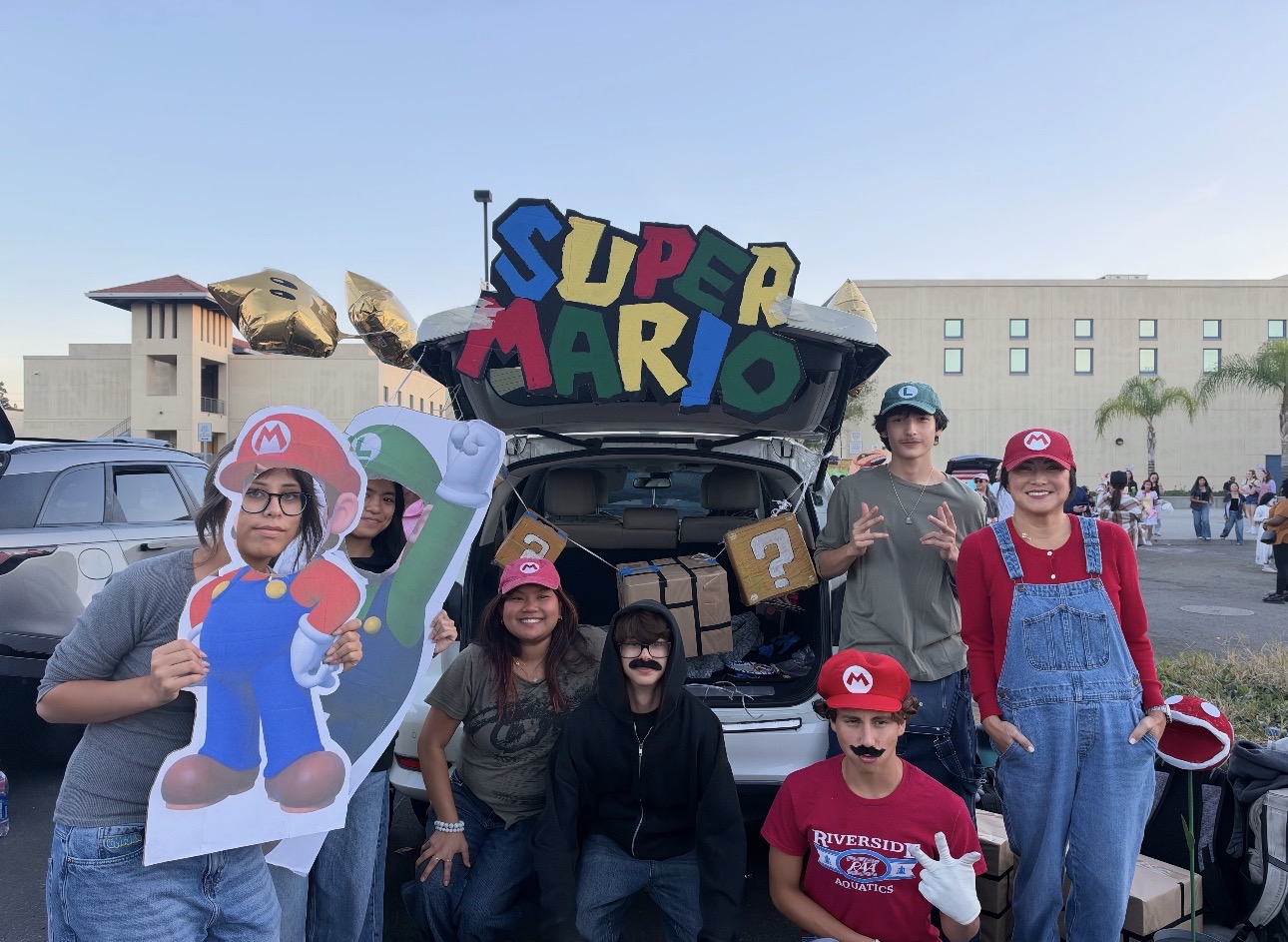
At Del Norte High School, DECA members attend the annual Best Buddies Trunk or Treat, connecting a Halloween tradition with community involvement. At Martin Luther King High School, DECA hosts a Halloween social featuring activities and movies. Both examples show how an event can bring people together while requiring planning, organization, and an understanding of what participants will enjoy.
A successful event doesn’t happen just because someone puts up decorations. Someone has to plan the activities, organize resources, promote attendance, and create an experience that makes people want to participate. Those are business skills, even when the goal is community engagement rather than profit.
For student leaders, the opportunity is to look at familiar traditions with a different perspective. What does your school community enjoy? What events could bring more people together? Is there a need that isn’t being met? Sometimes, the next great idea isn’t a completely new concept – it’s a better way to do something people already love.
More Than a Night of Costumes and Candy
Halloween’s transformation into a multibillion-dollar industry wasn’t the work of one company or one brilliant marketing campaign. It happened as traditions evolved, consumer habits changed, and businesses found ways to become part of something people already loved.
And maybe that’s what makes Halloween so interesting from a business perspective. No one needed to convince people to invent a reason to celebrate. The tradition was already there. Businesses simply found ways to build around it, turning a single night of costumes and candy into an industry that operates for months.
What started as a tradition became an opportunity and every October, businesses get another chance to make the most of it. So I encourage you, as a future business leader, to keep looking out for these opportunities. Look beyond what’s already been done, pay attention to what’s changing, and find ways to turn those opportunities into successes.
Post by: Akshara Veera | Southern California DAT VP of Leadership

Beyond the Stage: How to Engage with DECA Before Conference Season
October 21, 2026With official conferences and competitions beginning in 2027, there are still many great ways to participate and qualify for ICDC in this fall semester. Here are three ways you can be able to engage with DECA these upcoming months: Submit to Corporate Challenges Corporate Challenges serve as a tangible opportunity for you to qualify for […]
Read MoreWith official conferences and competitions beginning in 2027, there are still many great ways to participate and qualify for ICDC in this fall semester. Here are three ways you can be able to engage with DECA these upcoming months:
Submit to Corporate Challenges
Corporate Challenges serve as a tangible opportunity for you to qualify for ICDC and win glass before you even step into Districts or SCDC. Hosted by partner organizations, Corporate Challenges invite DECA members to film videos, create pitch decks, and run projects. Notable challenges include the EHL Hospitality Business School’s Hospitality Sustainability Innovation Challenge where a group of 1 to 4 participants present a 5 minute pitch on a digital experience for strengthening the sustainability efforts of a hospitality brand. Additionally, the Knowledge Matters Digital Presentation Challenge invites students to develop a 1 to 2 minute presentation on any topic relating to one of the Knowledge Matters business simulations. Competing in these challenges not only sharpens your real-world business skills but also offers a great way to engage with DECA beyond the live conferences.
Apply for DECA Scholarships
If you are a Junior or Senior, DECA offers various scholarships that you may qualify for. Due on January 11 2027, these scholarships offer up to $2,500 for students interested in pursuing futures in any of the DECA clusters. DECA members can apply for two main types of scholarships: general regional awards (such as the Western Region DECA scholarship, which offers two $1,000 prizes) and corporate-sponsored awards (such as Raising Cane’s which provides five $1,000 scholarships to students either working at Raising Canes or interested in restaurant management and the food industry). Moreover, students participating in School-Based Entrepreneurships can also qualify for the NRF Foundation SBE Innovation scholarship and the Otis Spunkmeyer scholarship. Scholarships serve as a great way to both gain financial support for your college education but also extend your engagement with DECA.
Submit ICDC Merch Designs to California DECA
Beyond DECA Inc, California DECA also has opportunities for members to engage in. Each year at ICDC, California DECA provides students with goodie bags that include cowboy hats and t-shirts. This year, we are asking you to submit your designs for our ICDC merch. You can submit a design for a cowboy hat band or for the t-shirt. Winners will be recognized at our ICDC delegation meeting in Anaheim and will have their designs on all our official gear this April in Anaheim. If you are interested in submitting, follow the California DECA Instagram page (@californiadeca) to see updates regarding this competition.
Post by: Katie Ong | California DECA VP of Leadership

Making Your MiniCon Count
September 30, 2026As the DECA season gets underway, MiniCons are one of the first opportunities to connect with other members, explore competitive events, and get involved for the year ahead. Whether you are attending your first MiniCon or have been to one before, these events are a great way to start the season surrounded by other members […]
Read MoreAs the DECA season gets underway, MiniCons are one of the first opportunities to connect with other members, explore competitive events, and get involved for the year ahead. Whether you are attending your first MiniCon or have been to one before, these events are a great way to start the season surrounded by other members who share your interests.
With MiniCons soon approaching across California, now is the perfect time to think about how you can make the most of the experience.
Come With Multiple Goals
With workshops, activities, and members from different chapters all in one place, it can be easy to attend a MiniCon without knowing what you want to get out of it (other than a medal)!
Before you arrive, think about one or two things you want to accomplish. Maybe you want to better understand your competitive event, meet members from another chapter, or discover an opportunity you have not considered before.
Having a goal can help you stay engaged throughout the day and make the experience more meaningful.
Ask Questions
MiniCons bring together members with different levels of experience, making them a great place to ask questions.
If you are unsure about your event, ask someone who has competed before. If you hear about an opportunity you have never tried, ask how you can get involved. If another chapter shares an idea that interests you, ask them how they made it happen.
You might only have a short conversation, but that connection could turn into a new friendship, a future collaboration, or simply someone you look forward to seeing at the next DECA event.
Get Involved
Do not be afraid to participate beyond your competitive event.
Join discussions, contribute your ideas, volunteer when opportunities come up, and take part in activities even if they are outside of your comfort zone. MiniCons are a low-pressure opportunity to try something new before the season gets into full swing.
You never know which conversation or activity could become one of your favorite parts of the day.
Keep the Momentum Going
MiniCon is only the beginning of the DECA season.
After the event, think about what stood out to you and how you want to approach the months ahead. Maybe you feel more confident about your event, found a new goal, or met people you want to stay connected with.
Whatever you take away from the experience, use it as motivation to stay involved throughout the season.
As MiniCons begin across California, remember that you do not have to leave with everything figured out. Come ready to connect, participate, and start your DECA season with purpose. Even if your chapter is not participating in a MiniCon, use this semester to continue preparing for District and State Conferences by practicing your event to gain confidence!
Post by: Kate Park | NorCal DAT VP of Leadership